 Reviews


 Proudly American


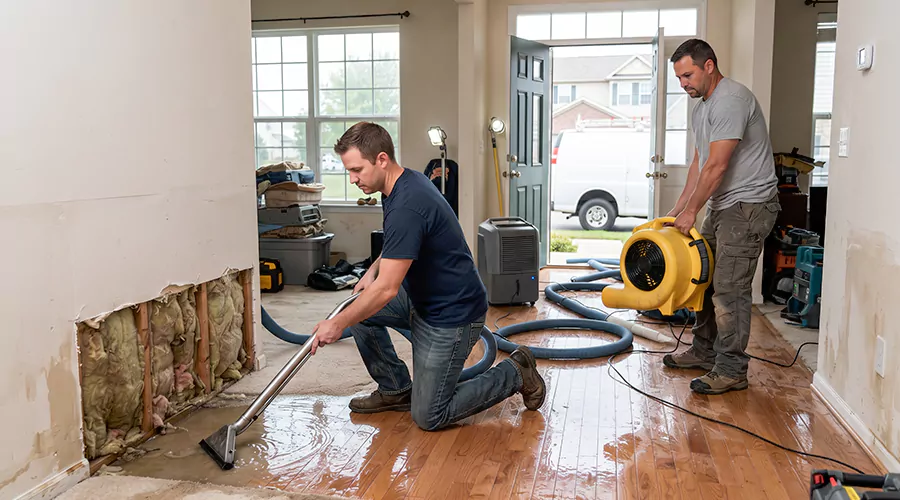
Water damage repair costs about $450 to $16,000 in 2026, with a national average near $3,868. The final price depends on the water source and how deeply moisture has reached building materials. A small clean-water leak can stay near the lower end while widespread damage can cost much more.
What Is the Average Water Damage Repair Cost?
The average water damage repair project costs about $3,868 in 2026. Current national data places the broad range at $450 to $16,000.
| Damage Level | Typical 2026 Cost |
|---|---|
| Minor localized damage | $450 to $1,500 |
| Moderate room damage | $1,500 to $5,000 |
| Several affected materials | $5,000 to $10,000 |
| Major water loss | $10,000 to $16,000+ |
The water damage restoration cost becomes higher when the project includes drying plus reconstruction. An extraction-only job usually costs less than one that includes new drywall or flooring.
How Much Does Water Damage Repair Cost per Square Foot?
Water damage commonly costs about $3 to $7.50 per square foot to repair in 2026. Clean water sits near the lower end. Gray water costs more. Black water reaches the upper end because contamination changes how materials must be handled.
Typical national rates are:
- Clean water: about $3.50 per square foot
- Gray water: about $5.25 per square foot
- Black water: about $7.50 per square foot
A 500-square-foot clean-water loss could start near $1,750.
Which Repairs Add the Most to the Cost?
Flooring and plumbing repairs can add thousands of dollars to a water-loss project. Drywall or ceiling damage often costs less unless a large area is affected. Mold removal can also raise the bill when damp materials remain wet long enough for growth to develop.
| Repair Type | Typical 2026 Cost |
|---|---|
| Ceiling repair | $450 to $1,600 |
| Drywall repair | $300 to $850 |
| Flooring repair | $200 to $3,000 |
| Plumbing repair | $350 to $4,000 |
| Basement repair | $500 to $2,800 |
| Mold removal | $1,200 to $3,800 |
Current national estimates place these repairs within the ranges above. Home water damage repair often includes more than one category. A burst pipe can require plumbing work first.
How Does Damage Severity Change the Price?
Water damage is often grouped into four classes based on how much material is wet. Class 1 is limited in scope. Class 4 involves deep saturation. Costs rise as water spreads into walls or subfloors because more drying and material removal become necessary.
| Damage Class | Typical 2026 Cost |
|---|---|
| Class 1 | $150 to $500 |
| Class 2 | $1,500 to $5,000 |
| Class 3 | $5,000 to $15,000 |
| Class 4 | $15,000 to $100,000 |
Class 1 can involve a small localized leak. Class 3 can affect ceilings and floors across one or more rooms. Class 4 can involve prolonged saturation of hardwood or masonry.
What Is the Difference Between Mitigation and Repair Costs?
Mitigation limits additional damage while repair restores damaged materials after drying. The water mitigation cost can cover extraction or dehumidification. Repair costs begin when damaged drywall or flooring must be replaced. Separating these phases makes an estimate easier to understand.
Mitigation can include:
- Removing standing water
- Setting drying equipment
- Tracking moisture levels
- Removing materials that block drying
Repair can include new drywall or flooring. The water remediation cost may overlap both phases depending on how the work is defined.
What Warning Signs Suggest a Higher Repair Bill?
Higher repair costs are likely when moisture has moved beyond visible surfaces. Water inside walls can increase drying time. Saturated floors can require removal. A contaminated source can also make more materials unsalvageable.
Watch for these signs:
- Water has reached more than one room.
- Drywall feels soft near the floor.
- Flooring begins to buckle.
- Carpet padding remains saturated.
- Water has entered a wall cavity.
- Ceiling stains keep spreading.
- A musty odor develops.
- Cabinets begin swelling.
- Sewage is involved.
- Moisture remains after active drying.
The visible puddle can be misleading. Water often travels farther beneath flooring than across the exposed surface.
How Can You Estimate the Cost Yourself?
A simple estimate starts with the affected square footage and water category. Measure the wet area first. Then multiply that area by about $3 to $7.50 per square foot. Add separate repair costs for damaged walls or flooring afterward.
- Measure the affected length and width.
- Multiply them for square footage.
- Identify whether the water is clean or contaminated.
- Apply the matching per-square-foot rate.
- Add obvious repair items separately.
For example, 400 square feet of clean-water damage at $3.50 per square foot starts near $1,400.
When Should You Call a Professional?
Professional assessment makes sense when water reaches electrical systems or several building layers. Sewage exposure is another clear trigger. Hidden moisture can also require instruments that show whether walls or subfloors remain wet after visible water has been removed.
Consider professional help when:
- Several rooms are affected.
- Sewage or floodwater entered the home.
- Electrical components became wet.
- Insulation is saturated.
- Water entered walls.
- Mold is visible.
- Drying has stalled.
An itemized estimate should separate extraction from reconstruction. It should also show whether later finish work is included in the quoted water restoration cost.
How Can You Reduce Future Water Damage Costs?
Fast leak detection can keep a small plumbing problem from turning into a multi-room repair. Routine checks also help catch slow leaks before drywall or flooring becomes saturated.
- Know where the main water shutoff is.
- Check appliance hoses several times a year.
- Inspect under sinks monthly.
- Test sump pumps before storm season.
- Use leak alarms near water heaters.
- Repair small plumbing leaks promptly.
Conclusion
Water damage repair can cost a few hundred dollars for a small loss or more than $16,000 when moisture spreads through several building materials. Water type and damage severity have the largest effect on price. Separate drying costs from reconstruction when reviewing an estimate. If moisture reaches walls or electrical systems, professional assessment can help define the true repair scope.
Frequently Asked Questions
Is water damage repair covered by homeowners insurance?
Sudden accidental water damage may be covered depending on the policy. Long-term leaks or outside flooding can be treated differently.
How much does it cost to repair water-damaged drywall?
Typical 2026 drywall repair costs range from about $300 to $850. Large affected areas can cost more.
Is clean-water damage cheaper to repair?
Yes. Clean-water repair averages about $3.50 per square foot compared with about $7.50 for black water.
Can water-damaged flooring be saved?
Sometimes. Fast drying can save some materials when swelling or delamination has not become permanent.
Does water damage repair include mold removal?
Not always. Mold removal can be a separate cost when growth is found after the water event.